Monday, 7 December 2015

"Riddle of the Mask" Review (SPOILERS)

"Your salvation depends on the truth of your convictions"


"Helena Rosa Bertenelli, otherwise known as the Huntress. Age 32. daughter of a former, but respectable crime lord. You chose to swear your life to vengeance after your family was brutally murdered."

"...Who are you?"

"A logical inquiry, but you have no power to interrogate... I, on the other hand, do."


With DC being such a fountain of source content, it's not surprising how many fan films are out there about the famous caped crusader, but I'm yet to see any of them pull off something as tense yet minimalist as Riddle of the Mask.


"You and your boyfriend are connected to car batteries, that are both electrically charged from a certain point. I press the button and you both are dead in 20 seconds. I have found from experience that this is a very uncomfortable way to die."


The plot of this short film revolves around one simple question, "Who is the Batman?".  Helena Bertinelli wakes up tied to a chair, faced with the death of her and her boyfriend at the hands of the weary and irritable Edward Nygma (also known as "the Riddler"). As far as plot goes, the piece could be seen as extremely minimalist. One location, three actors, and one long conversation. If a film follows a single conversation thread, it needs two things: compelling actors that understand their characters well and a hell of a good conversation topic.

Needless to say, this film got it right as with a simple question, lots of death threats, a few nifty Batman lore references and two characters at each others throats with mere words - this film in some respects has done what larger budget comic book movies have failed to do in feature length run times.


The cinematography of the piece is very unique, I'm yet to see another comic fan film to use lighting in the way that Justin Zagri did as though minimalist, it worked exceptionally well to maintain the tension, realism, and style of the film throughout the run time. The set itself is also interesting, as one would expect a short film of this genre would need locations of a greater grandeur to capture what makes the comics great - yet, they used a chair, some props, two actors and we never see outside the room in the fifteen minutes of run time. It's impressive to see a film doing this much fan service with the characters and situation while simultaneously using a mise-en-scene that consists largely of a dark empty room and a chair tangled in wires from a "car bomb" (notice how the bomb doesn't go off when the chair is kicked over. Nygma was bluffing from the beginning).

The camerawork was good, with the majority of the film being mid shots of close ups of the two main characters which really amplifies the drama by fully taking in all of their body language and expressions in reaction to each other. What really makes this film fascinating though is the framing and how the power balance doesn't noticeably visually shift in the second part of the film. This could be because of Edward having the physical upper hand, given his armed and dangerous position, opposed with Helena's oratory power - reflecting the "brains vs brawn" idea through the cinematography. Having said that, the shots with Helena increase in duration as the power over their conversation is taken, with the Huntress passionately ridiculing the Riddler with an intensity that leaves him broken with much emphasis on her victory.


"Break the man? Break... the Batman? A man so strong and skilled, and resourceful... and you wanna break him?" 


Helena Bertinelli (Charissa Saverio) makes for an interesting protagonist figure in the film. Though her morals as a character are often questionable, Saverio plays an ultimately likeable character - one who held up against physical and psychological attacks throughout, only to completely turn the tables at the end. The defiance in her eyes and the manipulation in her words was cleverly done, from the original screen writing to Saverio's performance, and the downward spiral she sends Edward on was thoroughly entertaining to watch:


"You scar him, you break him, you take everything from him, but what do you think a man, even the Batman, is gonna do when he has nothing left to lose?"


Beau Marie, despite the pressures of the role when considering the iconic portrayals of the character in recent years, delivered a spectacular portrayal of the Riddler that honestly may be the best characterisation to come out of the DC fan base. His dark and cynical twist on Edward Nygma brought a grittiness that wouldn't be out of place in Nolan's recent Dark Knight trilogy, and a dry humour that can make an audience chuckle and be terrified simultaneously. His sadism fit really well with the character, moving far away from the camper characterisation by the likes of Jim Carrey and Frank Gorshin into a Riddler shaped by the darker Gotham that has come out of the shadows (pun intended) in recent years - the Fox series "Gotham" being an excellent example of the grittiness of the comics being brought into the light.


"I have... removed your deceiving façade, and neither Batman nor your faith will save you here, sister..."


The anger in his character in consideration of his other iterations feels refreshing, and the moment when he kicked over Helena's chair almost felt as savage as the Joker's pencil trick in the dark knight - with the cinematography making you experience the shock and the pain alongside the Huntress. Of course as mentioned beforehand, Bertinelli got her revenge at the end, and Marie played the defeated puzzle master to perfection in the last act and somehow made this terrible character easy to sympathise with. All the best villains are those that the audience can relate to, we can expect great things from Marie in his future acting projects.


In all, this film is likely one of my favourite fan adaptations of this source material. The film being comparably smaller in budget than professional blockbuster adaptations would make you think that it would lack in quality, but the team behind "Riddle of the Mask" did more in 15 minutes than some films have done in their run time. The realism paired with the integration of the comic book canon just showed that the darker parts of the DC universe can be brought to the big screen effectively with the right story, writers, and talented cast. The mother of all riddles now, is how DC could pull this type of material off (officially) with the restraints of hollywood and needing to appeal to wider demographics in the mainstream superhero film market, but in any case, films like these will likely be made regularly for years to come given the enthusiasm of the fans.


Joke of the Day:

Q: What's the Riddler's favourite TV programme?

A: Question time.


All image and video materials used above are the property of the original owners and are only being used for reviewing purposes.

Friday, 11 September 2015

"Hannibal" (2001) Review: Hunter becomes the Hunted

Hannibal (2001) Promotional Poster

Hannibal: Review

Released: 2001

Directed by: Ridley Scott

(SPOILERS)
----------------------------------------------------------------------------

Anthony Hopkins as Dr. Hannibal Lecter in "Silence of the Lambs" and it's subsequent sequels based on the critically acclaimed Thomas Harris novels could be seen as an iconic role in the horror genre, spanning from the 1990s all the way up to the early 2000s.

His eerie yet disturbingly relatable portrayal of the insane yet gentlemanly cannibal has intrigued generations of cinema-goers, and arguably revolutionised the horror genre by giving the audience a character to relate to, yet be disgusted by.


The plot revolves primarily around disgraced FBI agent Clarice Starling, who had gained prior fame for interviewing Dr. Hannibal "the Cannibal" Lecter in the case involving "Buffalo Bill" (a psychopath that skinned his victims), and subsequently catching him at the end of "Silence of the Lambs", before Lecter himself escaped in the conclusion to the cult classic. Her determination to catch Lecter in this film becomes a prominent driving force, and often seems like she's trying to catch fog with her bare hands as Lecter is presented throughout as extremely clever and manipulative, covering his tracks wisely throughout the piece (though despite this, it's inevitable that he was found). This is paired with the twisted determination of deformed psychopath Mason Verger to catch Hannibal for personal revenge (as Hannibal had enticed him to cut off his face after injecting him with drugs), so this twisted mirror of Justice and Personal Vendettas plays interestingly as the film progresses- from the face to face meeting between Starling and Verger near the start, all the way up to the vicious conclusion that saw Verger fed to his own pigs.


Still from Hannibal (2001), "The Verger Estate"
I personally enjoyed the rich and cleverly devised cinematography throughout the piece that gave the film a grandeur that I'm sure differs from it's predecessor (with the title character of this film in a prison cell almost throughout). The shots of Florence, the inclusion of fine arts and cuisine, as well as incredible locations such as the Biltmore Estate in North Carolina (used for Mason Verger's mansion) all left me in awe as a viewer. I particularly found the juxtapositions of lighting interesting, as America is often shown through Starling's perspective (usually her dingy basement office, blue low key lighting) whereas Florence in comparison is so much more full of life (high key and vibrant- perhaps alluding that Lecter's life choices are preferable to hers despite his flawed morality). The colour palette could have been more vibrant, but knowing the genre and content it's logical that these locations look drained from time to time, much like the flesh of the unfortunate lambs that have the misfortune to happen upon the fine doctor in the film.


Still from Hannibal (2001), "The Boat House"
This being the first film I'd seen of this franchise (excluding the NBC Television series, 2013-15), I was apprehensive about the cast and whether or not they would carry this type of story in a convincing way, as some horrors often rely on cheap jump scares and an excess of blood to make a story "good". Needless to say, I was pleasantly surprised, particularly with the performance of Julianne Moore as Clarice Starling, establishing her character with a career diminishing moment helped build audience sympathy- before her long haul in the film to find Lecter. What I also found particularly refreshing is her character's admirable tendency to call people out and express her opinion in a sea of her unempathetic superiors in the FBI- a particularly memorable moment being when her boss not so subtly stated his interest to "go a few rounds" with her, to which she replied:

"In the gym. Any time. No Pads."


Still from Hannibal (2001), Julianne Moore as protagonist "Clarice Starling"
Of course, however, the attraction of the film is in the title protagonist, the cannibalistic doctor himself played by the masterful Anthony Hopkins. Personally, I feel that Hopkins brings a certain air of dangerous elegance to the role- as if he were a shark in a dining suit, ready to snap at the guests if needs be (which is an interesting image, I know, but think of it when you watch him chew a guy's face off and dear reader you may see an animalistic resemblance). His voice itself plays a crucial role in the film, as Starling often listens to taped recordings of her interviews with him throughout the film- although it could be said that these are presented as almost a comfort to her character, as Lecter, as psychotic and morally corrupt as he is, gives very clear and blunt advice to her (leading to her defying FBI protocol at the climax of the piece as Verger finally captures Lecter). His calmness is what strikes me as a viewer as the most disturbing, as it begs the question how he justifies what he does in his mind, and how his personality can be both horrifying (cannibalism and vicious violent tendencies) yet have grace and composure (shown mostly through his ability to remain civil, even to those who deceive or threaten him in the film).

"You feel like it's your duty to protect the sheep, they don't."
Still from Hannibal (2001), Hopkins respectively as "Dr. Hannibal Lecter"
The rest of the cast similarly produced very three dimensional characters. From primary horrifyingly disturbed antagonist Mason Verger (Gary Oldman), to Ray Liotta's portrayal of Paul Krendler (who, like the Scarecrow from the Wizard of Oz, likely desired a brain by the end of the film), to arguably minor characters like Cordell- every character felt purposeful and fit in the dark world painted by Ridley Scott.

In regards to genre, obviously the horror elements played out, but I felt like this isn't a piece to be scared of- rather a sick type of horror that would intrigue an audience rather than disgust, linking with the likeability of the title character. The blood was plentiful, the gore was varied, and the rare jumps in the piece made me feel as the creators intended me to feel as an audience member- but what really struck me personally is the story, as it could be seen as going against many conventions by creating an intelligent antagonist (or "protagonist" depending on how one perceives Lecter) that's layered, intricate, and has an almost kind nature that makes one question the dark side of the character existing at all.

Imagery used in the film, and opportunities taken with the plot were excellently thought out, and generally brilliantly creepy. A memorable moment from the back half of the film saw Lecter tie Italian Inspector Rinaldo Pazzi up, and calmly interrogate him over who he was working with to capture him. Pazzi's subsequent death, as gruesome as it was, served as a brilliantly powerful and iconic image added to by the foreshadowing of his ancestor suffering the same terrible fate. Hopkins really outdid himself with this scene, even placing his hand on Pazzi's shoulder in the prior scene, physically marking him and sealing his fate.

Another moment I particularly enjoyed was the moving conversation between Starling and Lecter in the shopping mall, and the instance when Lecter actually touches Starling's hair without her noticing- creating almost a ghostly presence of himself in the brilliantly creepy inclusion. The use of Crucifixion imagery, however, remains the most powerful in my opinion- particularly Hannibal's fate of being eaten alive by Mason's pigs, as he's raised with his arms facing out into the air, connoting with Christianity and perhaps presenting him as some sort of martyr through this choice of shot.

I really need to praise the composers and everyone involved in creating the soundtrack of the film, as it made the film feel even richer and gave it more depth. The soft piano acting as comfort (perhaps juxtaposed with murder, less so), and the more grandiose orchestral pieces mapping out the world as one of light and dark, vivid colour and persons of interest for the viewer to explore in the running time is interesting to experience, and no doubt inspires me as a film-maker as the music is just so fitting, yet equally uncomfortable (a horror convention that the film rose spectacularly to). 


Still from Hannibal (2001), Lecter (Hopkins) and Starling (Moore) in silhouette.

Overall, I genuinely enjoyed Hannibal. Being the first full film of the franchise I have seen, I was unsure what the piece would be like, but with the striking vision of director Ridley Scott, spellbinding performances by the cast (particularly Moore and Hopkins), and the disturbing pairing of horror and beauty playing as a major theme throughout the piece- I can safely say that this will be a film to look back on in nostalgia.


Quotes:

"If you work with me, then your so called Career here might improve, if you don't then all I have to do is draw a line through your name, rather than under it." - Paul Krendler (Ray Liotta)

"I wasn't speaking to you, Mr. Krendler. When I speak to you, you'll know it because I'll look at you." - Clarice Starling (Julianne Moore)

"As your mother tells you, and my mother certainly told me, it is important, she always used to say, always to try new things." - Hannibal Lecter (Anthony Hopkins)

"When the fox hears the rabbit scream he comes a-runnin'... but not to help." - Mason Verger (Gary Oldman)

"Okie dokie, let's drag these down. They must be as heavy as bodies." - Hannibal Lecter (Anthony Hopkins)


Sources:

https://www.youtube.com/watch?v=eHSYth2wSEk&feature=youtu.be

https://en.wikipedia.org/wiki/Hannibal_Lecter_(franchise)

http://www.imdb.com/title/tt0212985/


All images and videos are being used for reviewing purposes only under fair use

Saturday, 29 August 2015

Hannibal Season 3 Episode 10 Review: "Strength of the Dragon" (Spoilers)

Image A - Hannibal (NBC) Titlecard (2015)

Hannibal Season 3 Episode 10 Review

Contains SPOILERS

Released: August 6th 2015

Genre: Horror/Psychological Thriller/Crime

Directed by: Guillermo Navarro


Being a fan of the previous two seasons of Hannibal, I began watching the third season with high hopes (as one does after success of prior seasons), and I can honestly say that the season is shaping up to be the best out of the three- mostly due to the introduction of the Great Red Dragon storyline from the novel "Red Dragon" (by Thomas Harris), and the subsequent astounding performance by Richard Armitage as serial killer Francis Dolarhyde.

Image B - Francis Dolarhyde (Richard Armitage) and Hannibal Lecter
(Mads Mikkelen) in therapy.
Those who have viewed Hannibal before know of the impressive and awe inspiring cinematography, very often marvelling in the incredible and delving into the surreal, but the conversation between Dr Hannibal Lecter (incarcerated psychopath and cannibal) and Francis Dolarhyde at the start was intricately and intelligently done. The scene shows them as if they're facing each other in Hannibal's old therapy office (when in reality they are talking to each other on the phone), and there are two versions of Dolarhyde in the room. The talking one is "The Great Red Dragon" and the other, silent and fearful is Francis himself, seemingly terrified yet in awe of the other half of his personality as it spreads its wings and transforms in the first scene of the episode.

Image C - "The Great Red Dragon" , Dolarhyde and Lecter (Armitage and
Mikkelsen).


"I want to sit before you as the dragon sat before 666 in revelation. I have things I would love to show you. Some day if circumstances permit, I would like to meet you. and watch you meld with the strength of the dragon." - Francis Dolarhyde (Armitage, respectively)


The rest of the cinematography remained to be just as powerful without even delving into the surreal and horrifying (though some scenes did do both). Throughout the run of the show, protagonist Will Graham (an FBI profiler, brought out of retirement to catch Dolarhyde) and Antagonist Lecter are always presented as being connected in mind- they think in similar ways, and have a unique relationship despite their moral differences. This is why the below shot (Image D) is so powerful, as it shows Serial killer in confinement, and profiler out of it- yet the glass mirrors Will's face so it hovers above Hannibal's reminding the audience through the cleverly made mid shot that Graham could easily have been the one behind bars- and that they are still together in mind after years of no contact.
Image D - Graham (Hugh Dancy) and Lecter (Mads Mikkelsen) in reflection.
In regards to acting, the cast did very well with this particular episode. Mikkelsen (as Lecter) has brought an interesting character to the screen for nearly three seasons now, but now that he's in confinement, he's brought a new level of calm hostility to the character which I personally find really refreshing and equally terrifying knowing what the Doctor is capable of. Many of the shots that involve Lecter are shot in Low key lighting, which is often connoted with Horror and creates a feeling of dread. but this lighting also brought an interesting element which I recently noticed. His eyes look a lot darker, almost as if they are completely black (shown in Image E) which reflects the idea of Lecter not being human, almost like a monster or demonic entity in a human skin suit.

Image E - Mikkelsen as Lecter.
Likewise, Gillian Anderson as Bedelia Du Maurier did exceptionally well in presenting a woman who has been through a lot, yet feels comfortable in her clarity, even if it means that her mind is as psychotic as Dr Lecter's. The sequence in which the episode is cross cut between Bedelia's conversation with Will Graham and the conversation with the patient that died in her care was brilliantly acted and masterfully designed to show her development in character and judgement, with the death of her patient revealing her true nature. What sticks in the mind though is her fascination with Will and Hannibal's relationship, as she describes Will as being more intimately involved with the doctor than she ever was.

Image F - Bedelia De Maurier (Anderson, respectively)


"You're here visiting an old flame" - Bedelia Du Maurier (Gillian Anderson)


But it could be widely agreed that Richard Armitage as Dolarhyde has stolen the show for the past few episodes, as his transformation into "The Great Red Dragon" is chronicled (the beginning of the episode showing him trying on his new voice, speaking to himself in the mirror). His mannerisms and nervous twitches are interesting as they make myself as an audience member uncomfortable (likely intentional as he's uncomfortable in his own skin). His relationship with Reba McClane has been interesting to watch, given his evident self loathing at his dark side, yet her optimism that he's a good person carries their relationship.

"I find you very mysterious" - Reba McClane (Rutina Wesley)

In the episode, Dolarhyde takes Reba to feel a tiger under sedation at a zoo, as she'd never seen a tiger before (given her blindness), but she could feel one (an experience not many will have come across, I'm sure). This scene in my opinion was extremely powerful as a metaphor for her relationship with Dolarhyde, as the tiger represents his normal self, yet it can be dangerous when awakened (the Great Red Dragon)- but in any case, her reaction to feeling the fur, then the face of the predatory big cat remains to be an extremely powerful scene which I applaud actress Rutina Wesley for.


Image G - Reba (Wesley) feeling the sedated Tiger.
Dolarhyde's behaviour around her still remains interesting to me, as his twitches and mannerisms suggest he's uncomfortable in his own skin (alluding to his alias), the moment that really made this behaviour click being the shot of his cocktail glass shattering on the floor, as if signalling a change in himself brought on by Reba's acceptance of him.

Image H - the Glass shatters, marking a change.
A particularly memorable shot comes slightly after as he and Reba become intimate, and we as the audience see through his eyes, resulting in the interesting shot below, connoting almost angelic imagery, linking with his perception of the dragon- eternal, immortal, everlasting- showing that his view of life is very different to others, as his interpretation of things seems to be exaggerated and rich in colour and imagination- a prime example of the excellent cinematography used in the show.

Image I - Reba through Dolarhyde's eyes.
"I like this dragon, Will. I don't think he's crazy at all. I think he might be quite sane, a magnificent thing to watch the world through his red haze." - Hannibal (Mikkelsen)

Will spent the episode looking for leads on the dragon, discussing with Hannibal about his motives and his sanity. The time pressures are mentioned as Hannibal states almost comically:

"11 days till the next full moon. Tick tock." - Hannibal (Mikkelsen)

Inferring that whatever the rest of the season holds in store, the Dragon will strike again. In any case this episode has become one of my personal favourite pieces of Television- due to it's vivid expressionism, solid acting, and the plot-line that has become even more twisted now that Will Graham has seen Dolarhyde face to face, after the Great Red Dragon took the painting that inspired the name, and consumed it viciously like an animal. Whatever the rest of the season holds, it will become clear, and knowing this show as a casual viewer- there will be death in the Dragon's wake...


Image J - The Great Red Dragon meets his Inspiration.

Sources:

http://www.imdb.com/title/tt4089746/

https://en.wikipedia.org/wiki/List_of_Hannibal_episodes

All image stills were taken directly from Episode 10 of Hannibal's Third Season (NBC). I don't own any of the images used in this post, and they're being used for reviewing purposes under fair use.

Friday, 28 August 2015

"Batman Begins" Review (2005): Symbolism and Reality

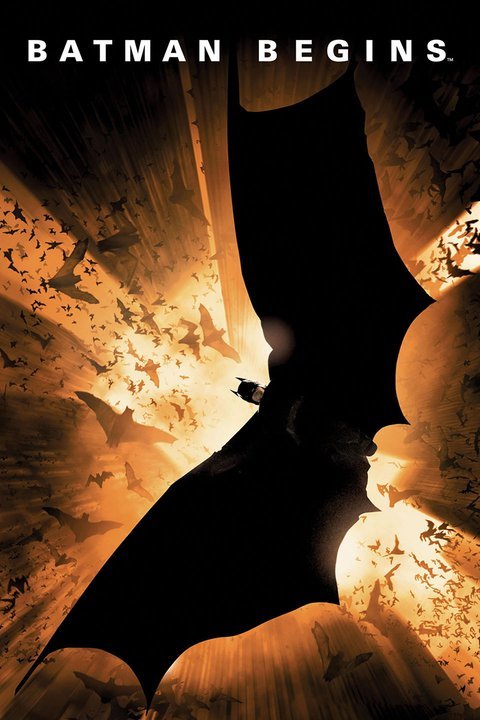
Image A - Promotional Poster

Batman Begins: Review

Released: June 2005

Directed by: Christopher Nolan

------------------------------------------------------------------------------

Hello there dear reader! I'm afraid this review is annoyingly long, and it doesn't even have any jokes about Christian Bale's "I'M BATMAN" line (excluding the ironic mention that I've just made) but other than that, it's maybe worth a read!

After having not watched Batman Begins in some time, I figured it was time to re-watch one of the films that arguably redefined the superhero genre and inspired gritty realism shown in many Superhero Films and Television series today.

         
The film starts out with the music by Hans Zimmer and James Newton Howard playing ominously as the logos for the involved film companies (Warner Bros. and DC comics) flash on the screen. This tension is broken by one of my personal favourite shots of the trilogy, a swarm of bats against an orange sky (at dawn- reflecting the start of the story and establishing the bat symbolism straight off the bat- no pun intended).

Throughout the film I found the cinematography to be mesmerising, particularly the sequences in the icy mountains and the glacier in the training montage between "Henri Ducard" and Bruce Wayne. The icy mountains are interesting as they could be seen as a visual link to the coldness inside our protagonist, and the struggles he's faced so far- broken by the warmth as he enters the League of Shadows' base. Likewise, the Long Shots of Gotham offer a rather unique colour palette yet unseen in the Batman film adaptations, as it looks very real and expansive, yet it's still believable that the city cinematography is intended for this new dark superhero genre that Christopher Nolan arguably set in motion with the first of the trilogy.

Image B - One of the first Extreme Long shots of Gotham City.
In regards to the characters, I can't fault it at all. Christian Bale (as Bruce Wayne, playboy billionaire and part time vigilante from hell) pulled off a spectacular performance as the sullen protagonist, finding his place in the world by dabbling in the criminal underworld, fighting seven guys in the mud ("I counted six, Mr. Wayne"), before finally joining a terrorist organisation hell bent on destroying his city (which they conveniently left out until he was ready to lead the men to war)- leading to his transformation into the iconic Batman, which was built up to extremely well by the writers, cinematographers (the shot of Bruce experimenting with his "wings" is quite memorable), and of course the director's vision for this iteration of the Dark Knight.

The supporting cast were just as amazing, Katie Holmes as Rachel Dawes, a moral and hard working district attorney, played the role well- and her character actually did stuff, which is refreshing given there are so many films where side characters are only there for emotional support for the protagonist, and seem to have no motivation or life in a two hour running time.

"It's not who you are underneath. It's what you do that defines you." - Rachel Dawes (Katie Holmes)


Everyone knows and loves Michael Caine as Alfred, and he rose to the role magnificently, playing Bruce's father figure and moral compass throughout the piece:

 "Why do we fall? So we can learn to pick ourselves up." - Thomas Wayne and Alfred Pennyworth (Linus Roache and Michael Caine)


and likewise Morgan Freeman's portrayal of Lucius Fox could be seen as a definitive role for this particular character in Hollywood, much like Ledger's Joker (which I'll ramble about too much in the next review).

The antagonists is where the dynamic is at though, with the legendary Irish born actor Liam Neeson as the Head of the demon himself, Ras al Ghul- and before I go on, who else noticed this line?

"I wasn't always here in the mountains. Once I had a wife. My great love. She was taken from me."

I shouldn't find the line this funny, but seriously, just read it through a few times then try not to smile a little at the writing team's choice of words  ("Very poor choice of words" as the clown prince of crime would say in the sequel). His characterisation is interesting as he's determined to make a city full of innocents burn, yet he has morals and genuinely believes what he's doing is the right thing to do- perhaps a commentary on twisted views on morality and honour in society today.

"Then watch Gotham tear itself apart through fear" - Ras al Ghul (Liam Neeson)


Of course, every Puppet-master antagonist needs a pawn- enter Scarecrow! Played to an eerie yet delightfully evil vibe by Cillian Murphy, and terrifying people with fire breathing horses since 1992!
Murphy's portrayal being the first iteration of the character in live action film or television must have brought pressures (likewise with Neeson as Ras), but the first time he puts on the mask will always stick in my head as a brilliantly horrifying turning point in the film, his character expressing the main theme of fear in the film through nightmarish hallucinogenic visions with his signature fear toxin.

"Would you like to see my mask?" - Dr Jonathan Crane (Cillian Murphy)


Image C - Cillian Murphy as "Scarecrow"
The editing in the film is interesting as well, straight cuts and a fairly conventional plethora of techniques in regards to individual scenes, but the structuring of the start by dotting past and present narrative to peel back the layers behind Bruce Wayne as a character worked extremely well given the need to show his journey to the cape and cowl- and in my opinion was the better decision opposed to the conventional yet mundane sequence of showing chronological change- which would mean there would have been an hour of nothing exciting happening, then the Batman's rise hitting the audience like a train (pun not intended, given how the film ends).

There's a particular shot in which the camera shows a close up of a Batarang on the wall before fading to Batman's introductory scene in which he apprehends a crime lord- showing through the fade that his influence will be monumental on these characters, as the Bat symbol stays in frame notably longer than a straight cut.

Symbolism, however is in the title, and there's lots to talk about in regards to symbols that recur, not just in this film but throughout the whole trilogy (which I applaud Christopher Nolan for, given how difficult consistency can be in creating film series). The symbol of masks is shown throughout the piece, not just of the obvious (Batman's cowl and Scarecrow's delightful mask of nightmare death), but of people leading different lives and hiding other sides of themselves. The corrupt police officers (Flass, particularly), having the masks of defenders of justice, yet they are the ones helping tear the city apart. "Ras al Ghul" being nothing but a diversion by the real Ras living under the guise of "Ducard" also shows that masks are everywhere in the film, so it's a good thing that Bruce put in an order for a unit of 10,000 (at least there'll be spares).

Bats as a symbol (excluding the bat signal, how does that even work?) are also there- given the protagonist and his fears, a particularly memorable sequence being the scene in which he calls "Backup" and a swarm of bats help him escape Arkham Asylum so he could save Rachel. The shot of him running past cell blocks surrounded by his winged allies is interesting, as it shows the protagonist as changed- a man and his fear, working in harmony and running past the criminality of his city. The other obvious symbolic scene being the impressively powerful shot of Bruce in the soon to be "Batcave" surrounded by a swarm of bats, unflinchingly having overcome his fear and embraced it as his persona, marking his transformation.

Image D - Bruce Wayne (Christian Bale) embracing his fears in one scene.
Of course other symbols like ice and fire featured throughout, reflecting what Bruce said about becoming something "elemental" that the criminals of Gotham will fear- and painting this world in a realistic light, light and darkness, hot and cold, good and evil (Binary oppositions that any good film needs to prosper).

In all, I enjoyed it the first time around (as a huge Batman fan, I hadn't experienced a reality quite like the one that Christopher Nolan painted here prior to this), and I may have enjoyed viewing it even more this time around, as Nolan created a universe that has inspired so many darker superhero films in past and coming years, upcoming DC film "Suicide Squad" (2016), focusing on a team of misfit criminals teaming up to "do some good" could be seen as having a similar visual aesthetic as the three parts of the legendary "Dark Knight Trilogy". It all started here.


Quotes:

  • "That's the power you can't buy. That's the power of fear." - Carmine Falcone (Tom Wilkinson)
  • "Tell them that joke you know." - Bruce Wayne (Christian Bale), to Alfred Pennyworth (Michael Caine)
  • "I won't kill you, but I don't have to save you."-  Bruce Wayne (Christian Bale)
  • "What is the point of all those push-ups if you can't even lift a bloody log?" - Alfred Pennyworth (Michael Caine)

Sources: